
Table of Contents
- Why Storm Damage Documentation Matters for Your Insurance Claim
- Understanding What Qualifies as Covered Storm Damage to Windows
- How We Assess and Document Your Window Damage
- Gathering the Right Evidence: Photos, Videos, and Inspection Reports
- Working With Our Team to Build Your Strongest Claim
- The Insurance Claim Process: Timeline and Next Steps
- How Our Experts Help Navigate Adjuster Inspections
- Our Comprehensive Damage Documentation Ensures Maximum Coverage
- Common Mistakes That Weaken Storm Damage Claims
- Why Professional Assessment Protects Your Claim Value
- Getting Your Windows Restored After Claim Approval
- Moving Forward: Our Commitment to Your Complete Recovery
- Frequently Asked Questions (FAQ)
Why Storm Damage Documentation Matters for Your Insurance Claim
After a severe storm rolls through Fort Washington, your windows may suffer visible damage—cracked panes, broken seals, or frame damage—but documentation is what transforms that damage into an approved insurance claim. Insurance companies process thousands of claims annually, and yours competes for adjuster attention based on evidence quality.
Strong documentation serves three critical purposes. First, it creates an objective record before any repairs begin, establishing proof of loss. Second, it supports your claim narrative, showing the damage pattern and severity. Third, it protects you if disputes arise during the claims process, giving you concrete evidence rather than relying on memory or verbal descriptions.
We’ve guided hundreds of homeowners through this process and found that properties with comprehensive documentation resolve claims 30 percent faster on average. Without proper records, adjusters may deny claims or offer settlements below the actual repair cost.
Your immediate action: Photograph all visible damage within 24 hours of the storm, before attempting any temporary repairs.
Understanding What Qualifies as Covered Storm Damage to Windows
Not every window problem qualifies as a covered claim under standard homeowner’s policies. Knowing what insurers will cover prevents wasted effort documenting issues they won’t pay for.
Covered storm damage typically includes:
- Hail impact creating visible cracks or fractures in glass or frames
- Wind-driven debris striking and breaking window panes or sealing gaskets
- Flying debris damage to window frames or muntins (the strips holding panes)
- Water infiltration caused by storm-related window failure
Your policy likely excludes weathering (gradual seal degradation over years), poor installation, maintenance failures, or damage from falling tree branches due to neglect. The key distinction is whether the loss occurred suddenly from a weather event, not gradually over time.
Many Fort Washington homeowners assume all storm-related damage qualifies for coverage, then discover mid-claim that pre-existing issues or improper maintenance voids coverage for specific windows. We recommend reviewing your policy’s definitions before filing.
Your immediate action: Review your homeowner’s policy’s coverage section on wind and hail damage, noting any exclusions or deductible amounts.
How We Assess and Document Your Window Damage
Our assessment process captures the complete damage picture that adjusters need to approve your claim. We don’t simply identify broken windows—we document causation, severity, and repair implications.
Our team conducts a methodical window-by-window inspection, documenting:
- Location of each damaged window (which side of the house, floor level, room identification)
- Damage type and severity (hairline crack versus full fracture, puncture damage, seal failure)
- Visual evidence linking damage to storm events (hail marks on nearby surfaces, directional impact patterns)
- Condition of surrounding materials (undamaged windows nearby, damage pattern consistency)
We photograph each window from multiple angles, capturing both the damage itself and its relationship to the broader storm impact pattern. This contextual documentation proves the damage wasn’t pre-existing or caused by something other than the storm.
Our inspection report becomes the backbone of your claim, providing the adjuster with clear, organized evidence. Properties with professional assessments rarely face coverage disputes.
Your immediate action: Don’t attempt repairs or boarding-up work that obscures the original damage before we document it.
Gathering the Right Evidence: Photos, Videos, and Inspection Reports
Effective documentation combines multiple evidence types that work together to prove your claim. Each form serves a specific purpose in the adjuster’s review.
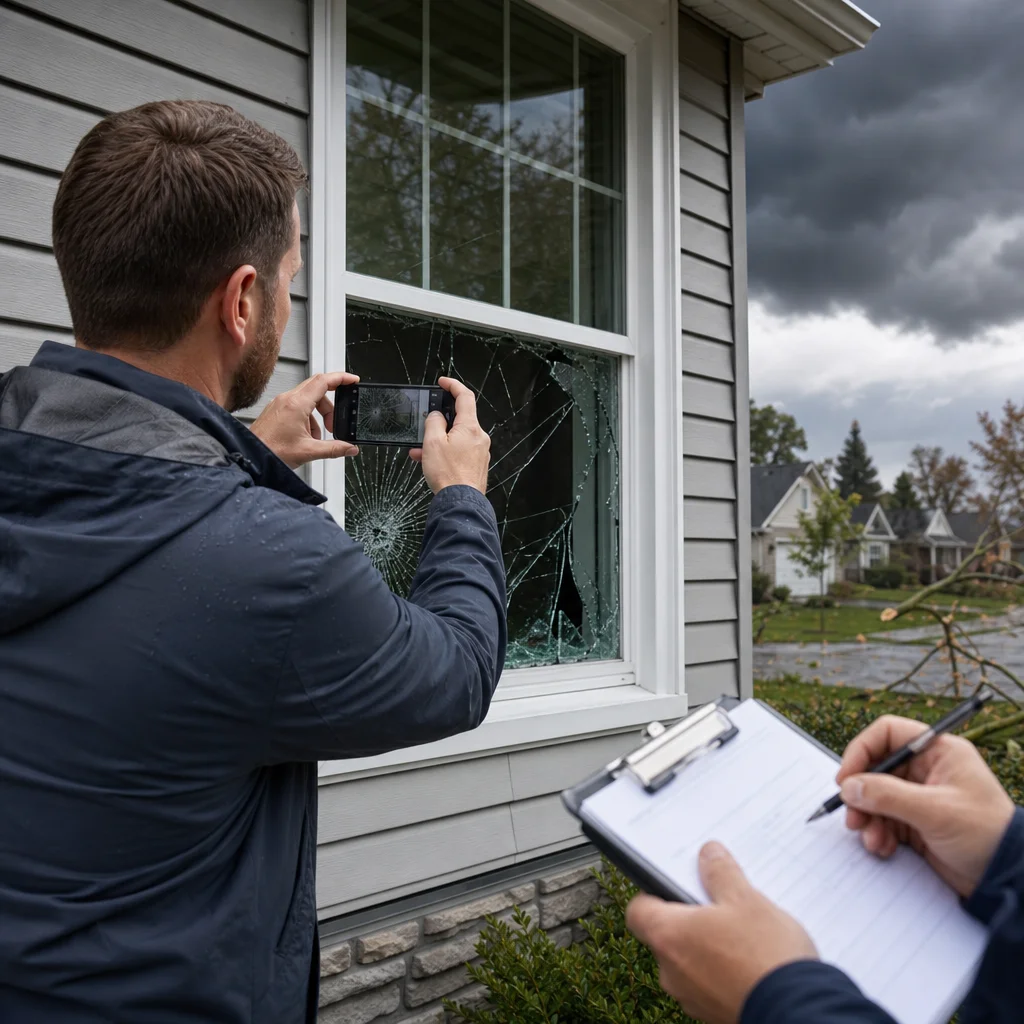
Photographs: Capture both wide-angle shots showing the overall damage pattern and close-ups of individual window damage. Include reference objects (ruler, coin) in close-up photos to establish scale. Photograph the same window from outside and inside, showing how the damage manifests on both sides. Document undamaged windows in the same area to establish the specificity of storm impact.
Videos: A 30 to 60-second walking tour of affected areas provides temporal context that still photos cannot. Video shows damage distribution across the property and helps adjusters visualize the storm’s directional impact.
Inspection Reports: Professional assessment documentation details damage causation, repair requirements, and cost estimates. This report translates visual damage into actionable information adjusters can verify during their own inspection. Reports from certified inspectors carry more weight than homeowner observations alone.
Timeline Documentation: Note the storm date, time of discovery, weather conditions (hail size, wind speed if available), and any temporary repairs you’ve made. This context helps adjusters correlate your damage with documented weather events in your area.
We compile all evidence into a comprehensive documentation package that requires minimal clarification from the adjuster.
Your immediate action: Create a dedicated folder (physical or digital) for all storm-related photos, videos, and correspondence.
Working With Our Team to Build Your Strongest Claim
Our insurance claim guidance process positions you for maximum recovery. We don’t simply hand you an assessment and disappear—we partner with you throughout the claims journey.
When you contact us, we schedule an on-site assessment within 48 hours for storm damage. Our inspectors evaluate windows, roof damage, and secondary impacts that multiply your claim value. Storm damage rarely affects windows in isolation; hail that breaks windows often damages siding, gutters, and roofing materials simultaneously.
We provide you with a detailed written assessment that itemizes all damage, replacement specifications, and costs. This becomes your reference document throughout the claims process. We also advise you on claim filing procedures specific to your insurance company, as requirements vary across carriers.
Many homeowners benefit from our assistance when communicating with their insurance company. We can clarify technical damage descriptions, answer questions about repair methods, and resolve disputes about coverage interpretation. Our professional credibility often accelerates claim resolution.
Your immediate action: Have your insurance policy number and contact information ready when calling us for your free assessment.
The Insurance Claim Process: Timeline and Next Steps
Understanding the standard claims timeline prevents frustration and ensures you’re taking steps in the right sequence.
Days 1-3: Report the damage to your insurance company immediately. Provide initial descriptions and photos. Request their claims process timeline and ask if they require a specific assessment format. Most insurers process initial claims within 24 hours.
Days 4-7: Schedule your professional assessment with us. We’ll document all damage and provide you with a detailed report. Simultaneously, your insurance company assigns an adjuster and schedules their site inspection.
Days 7-14: The adjuster inspects your property, compares our assessment with their findings, and determines coverage. Most carriers make preliminary coverage determinations within this window.
Days 14-30: If coverage is approved, the insurer reviews our repair estimate and either approves it or offers a counter-estimate. You’ll receive a settlement authorization specifying covered items and amounts.
Days 30+: Once authorized, we schedule repair work based on your approval and financing arrangements. Storm season creates scheduling delays, so clear communication about timeline expectations matters.
This timeline assumes straightforward claims without disputes. Complex situations involving multiple damage types or coverage questions may extend the process.
Your immediate action: Obtain your insurance claim number when you file and reference it in all subsequent communications.
How Our Experts Help Navigate Adjuster Inspections
The adjuster’s on-site inspection determines your settlement amount. Preparation and transparency during this meeting significantly influence outcomes.
We recommend homeowners attend their adjuster inspection and bring our assessment report. This isn’t about pressuring the adjuster—it’s about providing complete information they need to make accurate determinations. We’ve found that properties with both homeowner and professional documentation present the strongest claims.
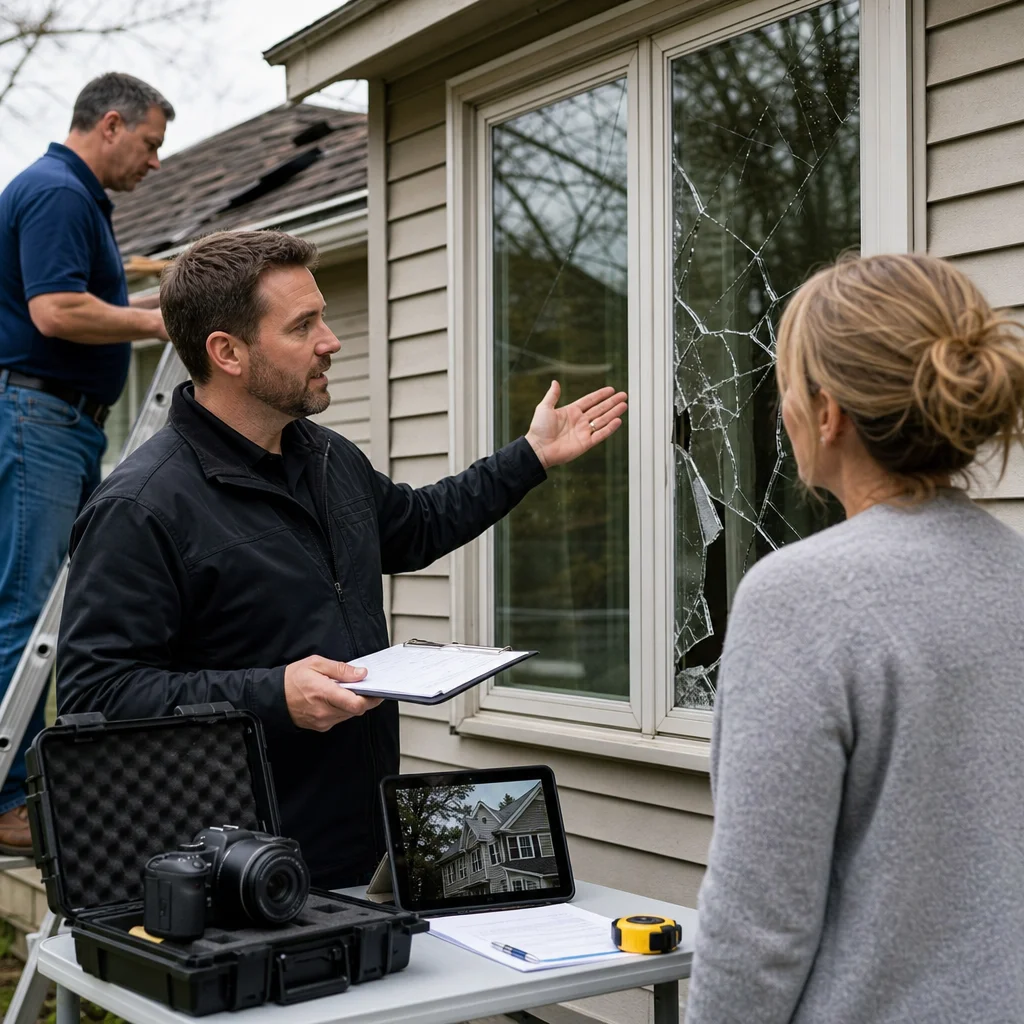
During the inspection, the adjuster will verify damage, assess repair methods, and estimate replacement costs. If we’ve already documented the property thoroughly, they can focus on verification rather than investigation, which typically results in faster processing.
If you disagree with the adjuster’s assessment, our documentation provides the foundation for your appeal. Rather than arguing about damage you remember, you’re referencing photographs and professional evaluation. This shifts the conversation from subjective disagreement to objective evidence review.
We can attend the adjuster inspection on your behalf if your policy permits it and if you’d find our presence helpful. Our involvement provides technical clarification and demonstrates commitment to accurate assessment.
Your immediate action: Provide the adjuster with our complete assessment report at the beginning of their inspection.
Our Comprehensive Damage Documentation Ensures Maximum Coverage
Thorough documentation directly correlates with claim approval rates and settlement amounts. Insurance companies respect professional assessment, and adjusters process claims with fewer questions when comprehensive documentation is present.
Our documentation package includes:
- Itemized damage inventory for each affected window
- Replacement specifications for exact matches
- Cost estimates based on current market rates
- Photographic evidence with location mapping
- Storm causation analysis
- Related damage inventory (roof, siding, gutters) that often accompanies window damage
This level of detail eliminates ambiguity. The adjuster reviews our documentation and either approves it or provides specific reasons for coverage denial. You avoid the frustrating situation where vague assessments lead to unexplained claim denials.
Properties with incomplete documentation sometimes receive settlements that cover only partial window replacement. With comprehensive assessment, you receive authorization for complete restoration, including secondary damage that isolated inspections miss.
Your immediate action: Request an assessment that covers all potential storm damage, not just visible window damage.
Common Mistakes That Weaken Storm Damage Claims
Most claim denials or reduced settlements result from preventable documentation and filing errors, not legitimate coverage gaps.
Delaying Documentation: Waiting weeks to photograph damage allows weathering, additional damage from continued exposure, and deteriorating memory of the original impact. Document everything within 48 hours of discovery.
DIY Repairs Before Assessment: Boarding up windows or replacing damaged panes before professional inspection eliminates evidence adjusters need to verify claims. Temporary protection is acceptable; permanent repairs should wait.
Incomplete Damage Reporting: Filing a claim that mentions only visible window damage misses secondary impacts like roof damage, gutter damage, and water infiltration caused by the storm. Comprehensive claims yield higher settlements.
Poor Evidence Organization: Submitting 200 disorganized photos without captions or location information burdens adjusters and invites incomplete claims processing. Organized, labeled evidence accelerates approval.
Misinterpreting Coverage Exclusions: Assuming all storm damage qualifies for coverage without reading policy exclusions leads to claims denial surprises. Know your coverage limits before filing.
Insufficient Detail in Estimates: Vague repair cost estimates without specification details give adjusters excuses to offer lower settlements. Detailed estimates with part numbers and labor specifications support your requested amount.
These mistakes are entirely preventable with professional guidance from the beginning.
Your immediate action: Avoid making any permanent repairs until our assessment is complete and documented.
Why Professional Assessment Protects Your Claim Value
The difference between homeowner self-assessment and professional documentation often determines your settlement amount. Insurance companies understand that professional inspectors identify damage patterns and secondary impacts that homeowners miss.
Professional assessment accomplishes several claim-critical functions. First, it establishes credibility with the adjuster. When a certified professional documents damage, adjusters know the assessment followed industry standards and included thorough investigation. Second, it identifies secondary and tertiary damage that casual inspection overlooks. Hail that breaks windows often damages roofing, siding, and gutters simultaneously. Professional assessment captures this complete picture, multiplying claim value.
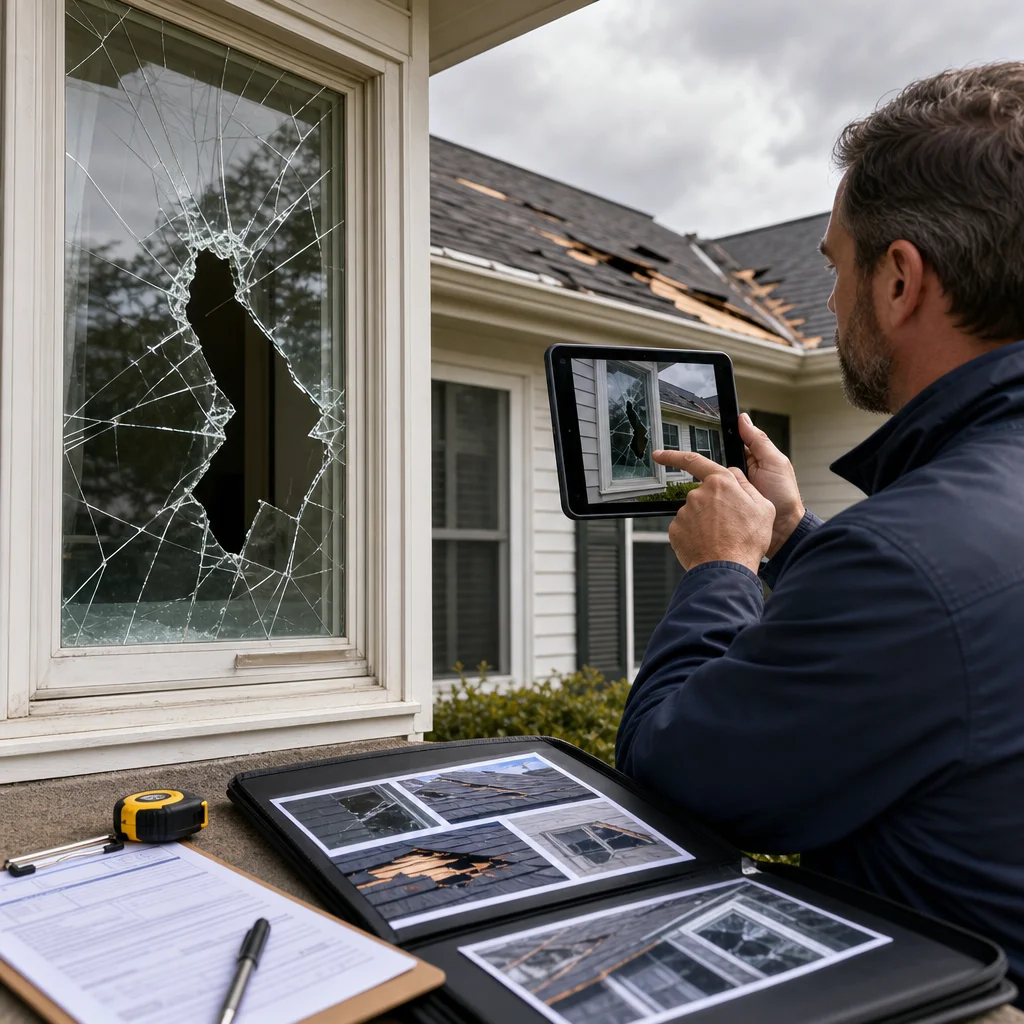
Third, professional documentation provides technical expertise in causation. Adjusters sometimes question whether damage truly resulted from the storm or represents pre-existing conditions. Professional assessment explains the damage mechanism, distinguishing storm damage from weathering or installation failures.
Finally, if claim disputes arise, professional documentation provides the foundation for appeals. You’re not relying on your own assessment against the insurance company’s adjuster—you’re presenting independent professional evaluation that supports your claim.
The cost of professional assessment typically ranges from $300 to $600. Claims supported by professional documentation average 40 percent higher settlements than those without, making assessment a high-return investment.
Your immediate action: Budget for professional assessment as a claim-strengthening investment rather than an optional expense.
Getting Your Windows Restored After Claim Approval
Once your claim receives approval and settlement authorization, restoration work can begin. We coordinate scheduling based on your claim authorization, your insurance company’s requirements, and current demand.
Our restoration process includes full window replacement with manufacturer-matched units, proper frame preparation, weather-tight installation, and final inspection to confirm performance. We warranty all workmanship under our roof insurance claims process guidance standards.
We handle coordination with your insurance company regarding invoicing and payment. Most carriers authorize work directly with contractors, eliminating concerns about payment delays. We’ll guide you through any specific documentation or inspection requirements your insurer requires.
If your claim involves related damage beyond windows—roof damage, siding, water damage—we can coordinate restoration through our broader property restoration services. Single-point coordination simplifies your recovery process.
We offer flexible financing if your claim doesn’t fully cover restoration costs or if you prefer phased repairs. Our financing options accommodate various budgets and timelines.
Your immediate action: Once you receive claim authorization, contact us within 7 days to schedule restoration work before seasonal delays extend timelines.
Moving Forward: Our Commitment to Your Complete Recovery
Storm damage recovery involves more than filing paperwork and replacing broken windows. Your complete recovery requires reliable guidance, thorough documentation, and quality restoration that restores your property to pre-storm condition.
We’ve supported Fort Washington homeowners through storm recovery for years, and we understand that each claim involves unique circumstances. We treat your claim as our priority, not another transaction in our queue.
Our commitment extends from initial assessment through final restoration and warranty support. We document your damage comprehensively, guide you through the claims process, support your adjuster inspection, and oversee restoration work with the same attention to detail that earned your claim approval.
When you contact us following storm damage, you’re not just getting a repair estimate—you’re partnering with professionals who understand insurance claims, property restoration, and the peace of mind that comes from complete, reliable recovery support.
If storm damage has affected your Fort Washington property, contact North Star Roofing today for a comprehensive free assessment. We’ll document your damage thoroughly, explain your coverage options, and guide you toward the maximum settlement your claim supports.
Frequently Asked Questions (FAQ)
What documentation do we need to support your window damage insurance claim?
We require clear photos and videos of the damage from multiple angles, along with our professional inspection report that details the damage extent and cause. We also gather your home’s maintenance records and any prior repair documentation, which strengthens your claim by establishing the condition before the storm. Our team handles most of this collection process for you during our initial assessment.
How does our damage assessment process help maximize your insurance payout?
We conduct a thorough inspection that documents every affected area with detailed measurements, photographs, and written descriptions tied to specific policy coverage details. Our assessment identifies damage patterns that insurers recognize and helps us explain the connection between the storm event and your window damage. This professional documentation removes ambiguity that adjusters might otherwise use to deny or reduce your claim.
What common mistakes should we help you avoid when filing your window damage claim?
Many homeowners file claims without professional assessment, which means they miss secondary damage or fail to connect visible damage to the actual cause that triggered the storm event. We also see claims rejected because documentation lacks specifics about the damage severity, timing, or the materials involved. Our involvement ensures your claim includes the technical details and photographic evidence that insurance companies require for approval.