


Table of Contents
- 1. Understanding Pennsylvania Building Code Requirements for Siding
- 2. Fort Washington Municipal Zoning and Siding Regulations
- 3. Material Selection Standards and Weather Resistance Ratings
- 4. Proper Installation Techniques and Best Practices
- 5. Flashing and Water Barrier Requirements
- 6. Energy Efficiency and Insulation Standards
- 7. Contractor Licensing and Certification in Fort Washington
- 8. Inspection and Permit Requirements Before Installation
- Frequently Asked Questions (FAQ)
1. Understanding Pennsylvania Building Code Requirements for Siding
If you’re planning a siding installation in Fort Washington, Pennsylvania, understanding local building codes and installation standards isn’t optional—it’s essential. We work with homeowners and commercial property managers throughout the area who discover too late that shortcuts in compliance lead to costly rework, failed inspections, and insurance complications.
This guide walks you through the eight critical standards you need to know before starting any siding project in Fort Washington. Whether you’re replacing storm-damaged exterior or upgrading aging materials, these requirements protect your investment and ensure your contractor meets local expectations.
Pennsylvania follows the International Building Code (IBC) with state-specific amendments. The Pennsylvania Building Code requires all exterior siding to meet fire ratings, structural integrity, and weather resistance standards outlined in Chapter 14 of the current code cycle.
Key requirements include:
- Siding materials must achieve a Class C fire rating minimum (some jurisdictions require Class B for commercial properties)
- Installation methods must account for seasonal wood movement and thermal expansion
- All siding must be installed over a code-compliant weather barrier
- Wind load resistance varies by region; Fort Washington falls within moderate wind zones requiring specific fastener spacing and anchorage methods
When we assess properties for siding work, we verify that existing structures meet current code standards. Older homes sometimes need substrate repairs or reinforcement before new siding can be installed properly. This upfront assessment prevents costly mid-project complications.
Your contractor should walk you through how the chosen materials and installation method satisfy Pennsylvania Building Code Section 703 and 704 requirements before work begins.
2. Fort Washington Municipal Zoning and Siding Regulations
Fort Washington falls under Upper Gwynedd Township’s zoning ordinances, which add local requirements beyond state code. The township requires permits for all siding installations, including material visibility from the public right-of-way and architectural consistency standards for certain residential districts.
Specific local considerations:
- Color selection may be restricted in historic districts or planned communities; verify with township planning office before purchasing materials
- Siding installation on corner lots or prominent elevations may trigger architectural review requirements
- Commercial properties must comply with Upper Gwynedd’s signage and facade standards
- Setback and extension rules apply if siding work extends beyond the original footprint
We handle the permit coordination and zoning verification for every project. This isn’t paperwork we skip—it’s the foundation of a compliant installation. Fort Washington’s township office can be contacted directly, but working with a contractor familiar with local preferences accelerates approval.

3. Material Selection Standards and Weather Resistance Ratings
Pennsylvania’s climate demands siding materials that handle freeze-thaw cycles, UV exposure, and seasonal moisture. The code doesn’t mandate specific materials—vinyl, fiber cement, wood, and metal all meet standards when installed correctly—but material selection shapes installation requirements.
Each material carries distinct weather resistance ratings:
- Vinyl siding requires backing board and proper ventilation specifications to prevent moisture accumulation
- Fiber cement boards must meet ASTM C1186 standards for durability and dimensional stability
- Wood siding demands paint or stain systems rated for Pennsylvania’s moisture and temperature swings
- Metal siding must include thermal breaks to minimize condensation and energy loss
We recommend fiber cement or engineered composites for Fort Washington properties because they resist both moisture intrusion and UV degradation without the maintenance demands of wood. These materials also pair well with advanced weather barriers that exceed code minimums.
When selecting siding, review product warranties against local environmental stressors. A material meeting code is the baseline; superior durability extends your system’s lifespan significantly.
4. Proper Installation Techniques and Best Practices
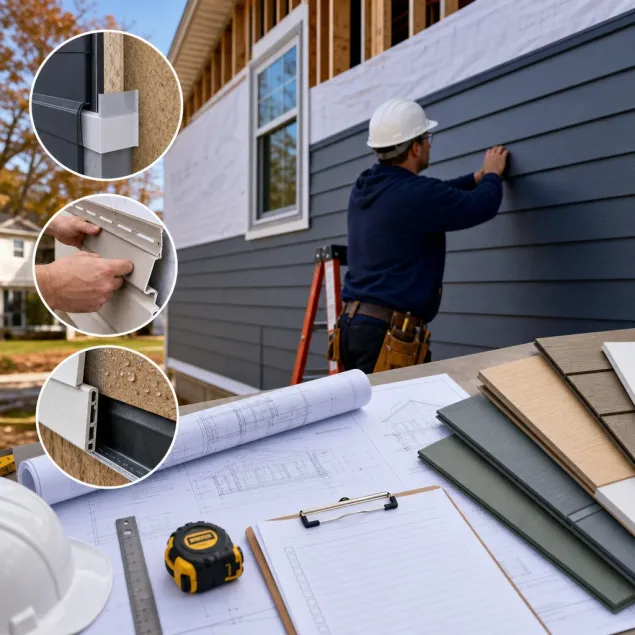
How siding is installed matters as much as what material you choose. Pennsylvania Building Code specifies fastener types, spacing, nailing patterns, and clearance requirements that directly impact weather resistance and long-term performance.
Installation standards require:
- Fasteners placed into framing or blocking, never solely into sheathing, at spacing intervals specified by the siding manufacturer (typically 16 inches on center for walls, 24 inches for backup)
- Horizontal siding installed with flashing at each horizontal joint to direct water downward and outward
- Corners reinforced with trim or corner posts that allow material expansion without binding
- All cut edges sealed with caulk or paint rated for exterior exposure
We’ve observed that many installations cut corners on fastening patterns or backup support, creating voids that trap moisture. This invisible mistake surfaces years later as rot or mold. Proper installation includes visible inspection points—our crews document fastener placement and backup verification before covering any work.
Schedule a walk-through with your contractor before finishing to verify fastening and flashing are complete. Don’t accept vague assurances about “professional installation”—ask for specifics tied to code requirements.
5. Flashing and Water Barrier Requirements
Water management is the silent hero of any siding system. Pennsylvania’s code mandates weather barriers behind all siding, with specific requirements for flashing at penetrations, transitions, and horizontal breaks.
Critical flashing locations:
- Windows and door perimeters require sealant and flashing that directs water down and away from the frame
- Roof-to-wall transitions demand step flashing installed under roofing and over siding for proper water shedding
- Horizontal siding joints need flashing if the substrate isn’t fully sealed beneath
- Foundation-to-wall transitions require vapor-permeable barriers that allow drying while blocking liquid water
We use weather-resistive barriers that exceed minimum code—synthetic materials rated for longer durability than traditional tar paper. These barriers remain functional for the siding’s entire lifespan, reducing future water intrusion risk.
Flashing installation quality often determines whether a siding job ages gracefully or deteriorates. This is where visual inspection saves money. Before the final walkthrough, check that all flashing is properly lapped and sealed without gaps.
6. Energy Efficiency and Insulation Standards
Pennsylvania’s energy code (based on IECC) sets minimum thermal resistance requirements for exterior walls. Siding installation often provides an opportunity to upgrade insulation without a full wall reconstruction.
Energy compliance considerations:
- Continuous insulation installed behind siding improves R-value and reduces thermal bridging through framing
- Proper ventilation spacing prevents moisture condensation in insulated cavities
- Air sealing at joints and transitions reduces infiltration losses
- Reflective or light-colored siding in sunny exposures can reduce cooling loads
Fort Washington properties benefit significantly from adding continuous foam board or mineral wool insulation during siding replacement. This approach costs less during initial installation than retrofitting later, and utility savings accumulate over time.
Energy efficiency upgrades may qualify for rebate programs through local utilities or state incentives. Ask your contractor about available programs when planning your project budget.
7. Contractor Licensing and Certification in Fort Washington
Pennsylvania requires home improvement contractors to register with the Attorney General’s office and carry liability insurance. For siding work specifically, verify that your contractor:
- Holds an active home improvement registration or contractor license
- Carries general liability insurance covering property damage and injuries
- Can provide references from recent Fort Washington-area projects
- Understands Pennsylvania Building Code and local zoning compliance
We maintain certification through the Pennsylvania Roofing and Sheet Metal Contractors Association and carry comprehensive liability coverage. Our crews complete annual code training to stay current with changes that affect siding installation standards. When you hire us, you’re working with contractors who understand not just how to install siding, but why code requirements exist and how to exceed them.
Ask for proof of registration and insurance before signing any contract. Unregistered contractors expose you to liability and typically cut corners on compliance.
8. Inspection and Permit Requirements Before Installation
Fort Washington requires permits for all siding installations. The permit process involves a plan review by the township’s building department, pre-installation inspection, and final inspection after work completion.
Permit workflow:
- Submit permit application with material specifications and installation details
- Allow 5-10 business days for plan review and approval
- Schedule pre-installation inspection if required (some jurisdictions do, some don’t)
- Notify township for final inspection after siding completion
- Obtain certificate of compliance before payment is finalized
We manage the full permit process, including applications, inspections, and documentation. This removes confusion about timelines and compliance status. Never skip permits to save time or cost—unpermitted work complicates future insurance claims and creates liability when selling the property.
After final inspection, request a copy of the certificate of compliance for your records. This document proves the installation meets code and becomes valuable documentation for insurance and future property transactions.
Working with a contractor who handles permits as standard practice—not an upsell—signals their commitment to doing the job right. We’ve built our siding practice on delivering installations that pass inspection the first time and function reliably for decades.
When you’re ready to move forward with a siding installation in Fort Washington, connect with us to discuss your project requirements and timeline. We’ll walk through these standards with you, handle all compliance details, and deliver an installation built to last.
For further reading: Best siding company in Pennsylvania.
Frequently Asked Questions (FAQ)
How do we ensure siding installations meet Fort Washington building codes?
We follow all Pennsylvania Building Code requirements and Fort Washington municipal regulations during every installation. Our team reviews local zoning requirements before starting work and coordinates with the township for necessary permits. We handle the inspection process to confirm your siding meets all compliance standards before we consider the project complete.
What flashing and water barrier standards do we implement during siding installation?
We install proper flashing and water barriers according to Pennsylvania building codes to protect your home from water infiltration and weather damage. Our installation techniques include sealed transitions at all openings and appropriate drainage planes behind the siding material. These measures prevent moisture from causing structural damage and extend the life of your siding system.
Do we assist with permits and inspections for siding work in Fort Washington?
Yes, we manage the permit application process and coordinate all required inspections with Fort Washington authorities. Our licensed contractors know exactly what inspectors look for and ensure your project passes on the first review. We handle these administrative details so you can focus on your property while we manage compliance.
