Table of Contents
- Why Storm Damage Assessment Matters for Your Business
- Common Commercial Property Damage We Encounter
- How Our Storm Restoration Assessment Process Works
- Our Zero-Regret Roof System Response to Storm Events
- Insurance Claim Assistance and Documentation Support
- Emergency Tarping and Temporary Protection Solutions
- Long-Term Restoration Planning and Financing Options
- Our 12 Iron-Clad Guarantees for Storm-Damaged Properties
- Timeline and Next Steps for Your Commercial Restoration
- Why North Star Roofing Leads PA and NJ Storm Recovery
- Frequently Asked Questions (FAQ)
Why Storm Damage Assessment Matters for Your Business
When a severe storm strikes your commercial property, the first 24 to 48 hours determine whether you minimize losses or face compounding problems. A thorough storm damage evaluation isn’t just about filing an insurance claim, though that matters. It’s about understanding the full scope of what happened so you can make informed decisions about repairs, temporary protections, and long-term recovery.
Without a professional assessment, property managers often miss hidden damage: compromised flashing, moisture infiltration in walls, structural weakening, or secondary vulnerabilities that create bigger problems months later. We’ve seen situations where a business delayed a proper roof damage assessment only to face interior water damage, mold growth, and operational disruptions that cost far more than immediate restoration would have.
A commercial storm restoration assessment gives you clarity, documentation for insurance purposes, and a roadmap for recovery. It also protects your liability. If someone is injured due to unaddressed storm damage, a documented assessment demonstrates that you acted responsibly.
Actionable takeaway: Contact a qualified assessment team within 48 hours of storm impact. Time matters for insurance documentation and preventing secondary damage.
Common Commercial Property Damage We Encounter
Storm damage varies widely depending on wind speed, hail size, and your roof’s age and material. Here’s what we typically evaluate:
Roof and structural damage: Missing shingles, granule loss, punctures from hail, bent flashing, compromised underlayment, and structural sagging are the most common issues. High winds can lift entire sections of roofing material.
Gutter and downspout failures: Debris impact often bends or detaches gutters, preventing water drainage and creating pooling that leads to leaks.
Skylight and vent damage: These protrusions are vulnerable points where wind and hail cause cracking or separation from the roof plane.
Wall and siding damage: Wind-driven rain forces water behind exterior cladding, especially at corners and transitions where flashing may have shifted.
HVAC and equipment damage: Rooftop units can be overturned, vibrated loose, or struck by airborne debris.
Secondary water intrusion: Sometimes the most costly discovery occurs weeks after the storm when interior water damage appears in unexpected locations due to compromised membranes or flashing.
Understanding the full scope helps you avoid surprise costs during restoration.
How Our Storm Restoration Assessment Process Works
Our commercial roof damage assessment follows a structured protocol to ensure nothing is missed. Here’s what happens when you call us.
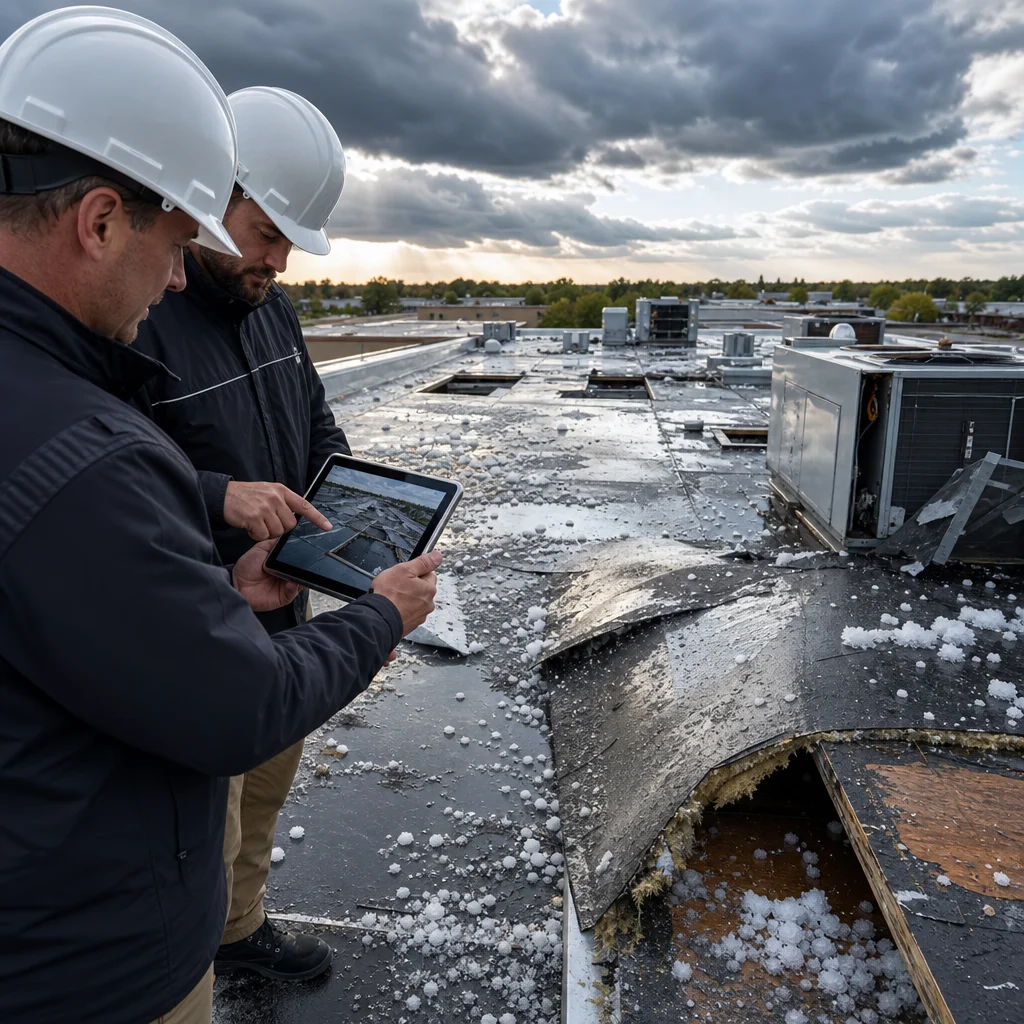
First, we schedule an inspection within 24 to 48 hours of your call. Our team arrives with documentation equipment, moisture meters, and climbing safety gear. We photograph the property from ground level, then conduct a detailed roof inspection, examining all vulnerable areas: edges, penetrations, valleys, and any existing repairs.
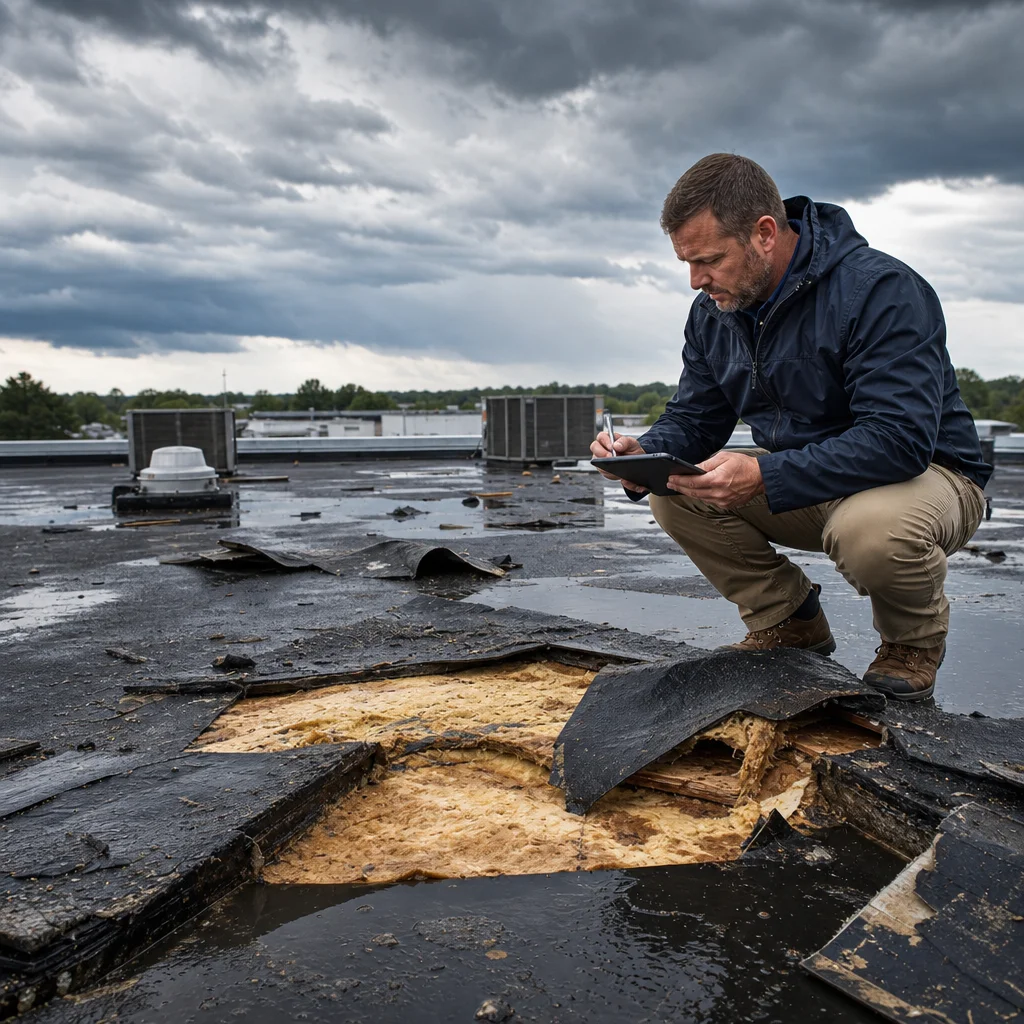
During the roof inspection, we look for obvious damage (missing materials) and subtle indicators (soft spots, buckled membranes, granule accumulation in gutters). We test flashing integrity, check for gaps, and assess whether underlying layers are exposed.
Next, we document water entry points. We use moisture detection tools to identify if water has penetrated interior spaces. This step is critical because visible water stains may represent only the tip of the problem.
We also gather information about your roof’s age, material type, previous repairs, and maintenance history. This context shapes our restoration recommendations.
Finally, we compile a detailed report with photos, measurements, damage classifications, and repair recommendations. This report becomes your foundation for insurance claims and contractor communication.
What to do next: Request a written assessment that includes photos, specific damage locations, and estimated repair costs. This document is essential for insurance negotiations.
Our Zero-Regret Roof System Response to Storm Events
We designed our Zero-Regret Roof System to deliver resilience without regret. It combines durable materials, proven installation methods, and comprehensive protection specifically for properties in storm-prone regions like Pennsylvania and New Jersey.
The system starts with high-quality roofing materials rated for impact resistance. We use Class 4 impact-rated shingles or commercial membranes that withstand hail and wind stress better than standard products. Proper underlayment and secondary water barriers are built in, so even if surface materials are damaged, water protection remains intact.
Installation matters as much as materials. Our crew follows strict fastening patterns that distribute wind loads across the entire roof rather than concentrating stress on individual fasteners. We seal all penetrations with proven methods to prevent micro-leaks that traditional installations might allow.
The system includes redundancy. If one component fails during a storm, others contain the damage so you don’t face cascading problems.
What makes this approach different is our post-installation commitment. We monitor the system through our lifetime workmanship protection, ensuring that any defects or issues discovered later are addressed at no additional cost.
Actionable takeaway: When planning a full roof replacement after storm damage, ask about impact-rated materials and installation methods that reduce future storm vulnerability. The upfront investment pays dividends in lower repair frequency and insurance premiums.
Insurance Claim Assistance and Documentation Support
Filing an insurance claim after commercial storm damage involves detailed documentation, precise language, and timely submission. We guide our clients through this process because the claim outcome directly affects your recovery costs.
We prepare detailed assessment reports specifically formatted for insurance carriers. These reports include precise damage measurements, material specifications, repair estimates aligned with industry standards, and photos clearly showing damage locations and severity.
Our team coordinates with your insurance adjuster. We explain technical findings in terms adjusters understand, point out damage they might overlook, and ensure your claim reflects the actual scope of restoration needed.
Many property managers don’t realize that insurance adjusters face time pressures and incomplete information. A clear, professional assessment report accelerates the approval process and reduces the likelihood of disputes over scope and cost.
We also help you understand coverage limits and deductibles so there are no surprises when repair bills arrive. If your coverage falls short, we discuss financing options and phased restoration approaches that fit your budget.
Actionable takeaway: Request that your roofer provide assessment documentation in a format your insurance carrier prefers. Ask what information they need to process your claim quickly and completely.
Emergency Tarping and Temporary Protection Solutions
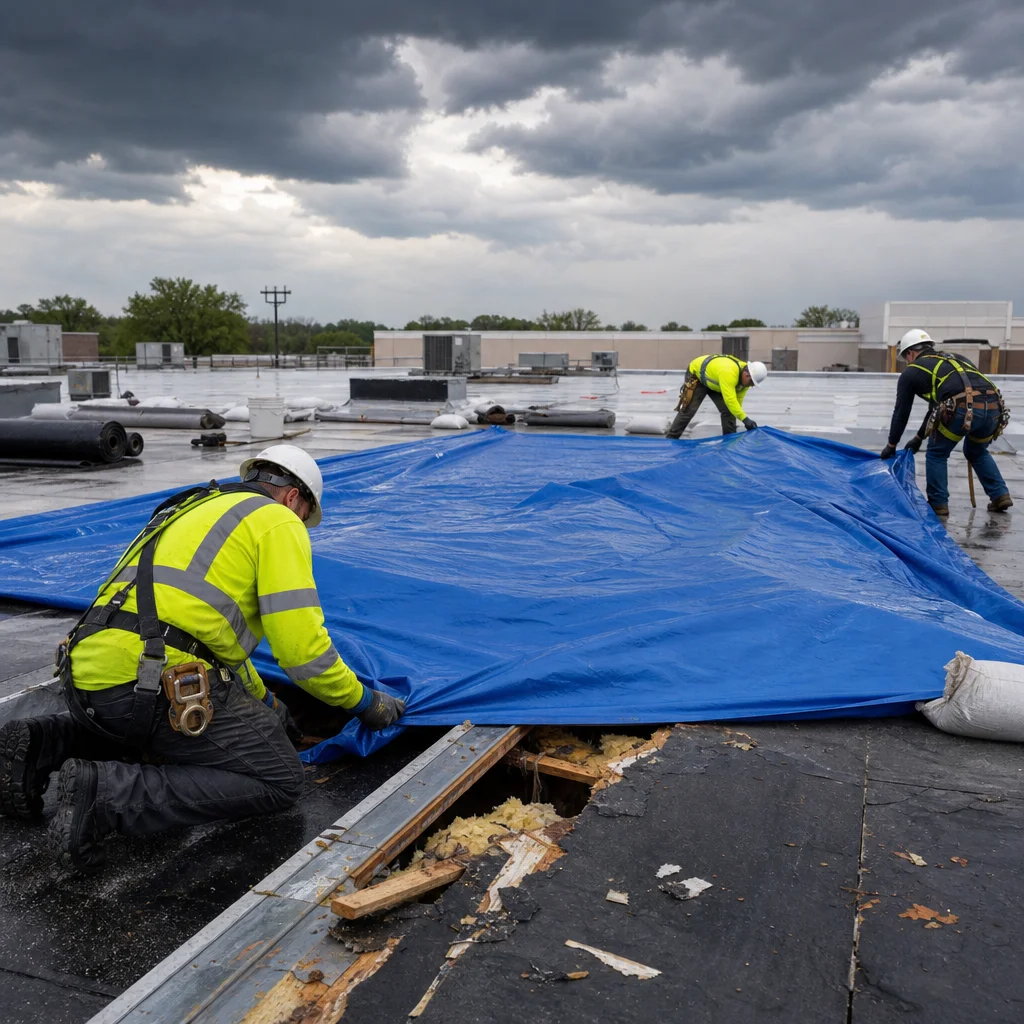
Storms don’t wait for insurance approvals or contractor schedules. Exposed roof areas invite further water damage, mold growth, and operational disruptions. Emergency tarping and temporary protection are critical bridge solutions.
Our emergency tarping services ensure that exposed areas are protected within hours of your call. We deploy heavy-duty tarping material secured with proven fastening methods that won’t tear loose in continued wind. Tarps are installed to shed water, not just cover openings.
Temporary protection extends beyond roofing. Boarded windows, covered skylights, and stabilized HVAC units prevent secondary damage while you plan permanent repairs.
The cost of a temporary tarping service is minimal compared to the cost of water damage spreading through your building. We’ve seen cases where a single day of exposure resulted in tens of thousands of dollars in interior damage.
Learn more about how we approach emergency tarping services and what to expect during deployment.
Actionable takeaway: Before scheduling permanent repairs, budget for temporary protection. It costs hundreds but prevents losses that climb into the thousands.
Long-Term Restoration Planning and Financing Options
Once immediate damage is contained, the focus shifts to permanent restoration. This is where you need a partner who thinks beyond the next six months.
We develop multi-phase restoration plans that prioritize the most critical areas first, then address secondary damage methodically. This approach allows you to manage cash flow, coordinate with insurance settlements, and maintain operations while restoration happens.
Financing options make comprehensive restoration achievable even when insurance falls short. We offer flexible payment terms and financing partnerships that let you complete necessary work without draining operational reserves. Many of our commercial clients appreciate the ability to spread costs across multiple billing cycles while we work.
We also discuss preventive measures that reduce future storm vulnerability. This might include roof reinforcement, drainage improvements, or equipment securing that pays dividends over years.
Actionable takeaway: Request a phased restoration plan that shows timing, costs, and insurance impact for each phase. This clarity helps you make decisions aligned with your business priorities.
Our 12 Iron-Clad Guarantees for Storm-Damaged Properties
Uncertainty during storm recovery is stressful. We address this with 12 iron-clad written guarantees that cover the full restoration scope. These aren’t vague promises, they’re specific, documented commitments.
Our guarantees cover material performance, installation quality, timeline adherence, and warranty compliance. We guarantee that materials will be installed correctly, repairs will hold up to normal weather, and workmanship defects will be corrected at no cost. We guarantee that our assessment is accurate and our cost estimates won’t balloon unexpectedly.
If temporary protection fails due to our installation methods, we fix it immediately at no charge. If permanent repairs develop issues within the warranty period, we correct them.
These guarantees exist because we stand behind our work. We’ve been serving PA and NJ for years, and our reputation depends on following through.
Actionable takeaway: Request a written summary of all guarantees before signing any contract. Understanding the full scope of coverage prevents disputes later.
Timeline and Next Steps for Your Commercial Restoration
Storm restoration timelines depend on damage severity, material availability, contractor capacity, and insurance approval. Here’s a realistic framework.
Days 1 to 3: Assessment and emergency protection. We complete the damage evaluation and deploy temporary protection if needed.
Days 3 to 7: Insurance submission. We compile documentation and submit claims while you gather permits or approvals needed for repairs.
Days 7 to 14: Insurance review and approval. Carriers typically respond within this window, though complex claims take longer.
Weeks 3 to 8: Permanent restoration. Depending on damage scope and crew availability, repairs progress from roofing through secondary areas.
Throughout, we maintain communication. You know what’s happening next, when to expect crews, and when restoration will be complete.
The key variable is insurance processing time. We accelerate this by providing detailed documentation immediately rather than making carriers wait for information.
Why North Star Roofing Leads PA and NJ Storm Recovery
Storm recovery requires technical expertise, equipment investment, insurance knowledge, and local credibility. We’ve built all of these over years of service throughout Pennsylvania and New Jersey.
Our team includes certified inspectors, experienced restoration crews, and administrative staff trained in insurance claim coordination. We own our equipment and deploy it immediately during emergencies, not days later when rental companies respond.
We understand regional building codes, common storm patterns in PA and NJ, and what insurance carriers in these states typically require for claim approval. This local knowledge accelerates your recovery.
Our Zero-Regret Roof System reflects lessons learned from hundreds of storm restorations. We’ve seen what holds up and what fails, and we’ve built that knowledge into our approach.
When your property faces storm damage, you need someone who moves fast, communicates clearly, and delivers lasting results. That’s what we do.
Contact North Star Roofing today for a commercial storm restoration assessment. We’ll inspect your property, document damage, guide your insurance process, and restore your building to full functionality. Call us or visit our website to schedule your assessment.
Frequently Asked Questions (FAQ)
What is included in our commercial storm restoration assessment?
We conduct a thorough evaluation of your entire property, examining roof damage, structural integrity, water intrusion points, and secondary damage to identify all areas requiring restoration. Our assessment includes detailed documentation with photographs and measurements that we provide directly to your insurance company to support your claim. We complete this process quickly so we can begin emergency protection measures if needed.
How quickly can we respond to storm damage at our facility?
We maintain 24/7 emergency response capabilities and typically arrive within hours of your call to assess damage and deploy tarping solutions if necessary. Our goal is to stabilize your property immediately while we prepare a comprehensive restoration plan. We understand that storm damage creates urgency, and we prioritize commercial properties to minimize your operational downtime.
Does our financing work with insurance settlements?
We offer flexible financing options that can be coordinated with your insurance claim, allowing us to begin critical restoration work while your claim processes. We handle the insurance documentation and coordination on our end so you don’t have to manage multiple timelines. Our team has extensive experience working directly with insurance adjusters to ensure seamless payment flow throughout your project.