

Table of Contents
- Why Hail Damage Documentation Matters for Your Claim
- The Critical Window: Acting Quickly After Hail Impact
- What to Document Before Contacting Your Insurer
- Photographic Evidence That Strengthens Your Claim
- Gathering Professional Assessment Reports
- How We Help Streamline Your Documentation Process
- Working with Adjusters: What You Need to Know
- Common Documentation Mistakes That Delay Payouts
- Navigating the Claim Timeline in Pennsylvania and New Jersey
- Our Insurance Claim Assistance Advantage
- Frequently Asked Questions (FAQ)
Why Hail Damage Documentation Matters for Your Claim
Hail storms can strike suddenly, leaving your roof vulnerable to significant damage. When that happens, the difference between a denied claim and full coverage often comes down to one thing: documentation. We’ve helped hundreds of homeowners and commercial property managers in North Wales and throughout Pennsylvania and New Jersey navigate this process, and we’ve seen firsthand how proper documentation can make or break your payout.
This guide walks you through exactly what insurers expect to see, when to gather evidence, and how to avoid common pitfalls that delay or reduce payouts.
Your insurance company needs proof. They’re not refusing claims to be difficult; they need objective evidence that hail caused the damage and that repairs are necessary. Without solid documentation, adjusters have little reason to approve substantial payouts, and you’re left covering costs that your policy should have addressed.
Strong documentation serves multiple purposes. It establishes a clear timeline, shows the extent of damage, connects that damage directly to the storm event, and provides the professional assessment your insurer requires for authorization. When you submit a claim with comprehensive photos, professional reports, and detailed descriptions, you’re essentially removing doubt from the equation.
The stakes are particularly high in Pennsylvania and New Jersey, where hail seasons can be intense. Properties in North Wales experience significant seasonal exposure, and claim processing varies between carriers. Getting your documentation right the first time prevents months of back-and-forth communication and keeps your repair timeline on track.
The Critical Window: Acting Quickly After Hail Impact
Time matters more than you might think. After a hailstorm, you typically have 30 to 90 days to file a claim, depending on your policy and state regulations. However, the real urgency lies in the first few days.
Document damage while it’s still fresh and visible. Weather exposure, debris clearing, and additional storms can alter the damage appearance or destroy evidence. Your roof deteriorates further without repairs, which can complicate the claim narrative. Insurance companies also appreciate proactive claimants who file promptly, as it suggests genuine concern rather than opportunistic claim filing months later.
If you see hail damage, contact a professional roofer immediately for an initial assessment. We recommend calling within 48 hours of the storm. This assessment becomes part of your documentation package and signals to your insurer that you’re taking the claim seriously.
What to Document Before Contacting Your Insurer
Before you pick up the phone to file, gather these essentials:
Date and time of the storm. Note the exact date hail occurred, weather conditions, and any news reports documenting the event. This establishes the claim’s foundation.
Your insurance policy details. Know your deductible, coverage limits, and any exclusions related to weather damage. This prevents surprises during settlement negotiations.
A written description of damaged areas. List specific locations: north-facing slope, gutters, vents, siding, skylights. Be specific about what you observed immediately after the storm.
Weather reports and public records. Screenshot or save news coverage, National Weather Service reports, or storm damage maps from your area. Third-party verification strengthens your position.
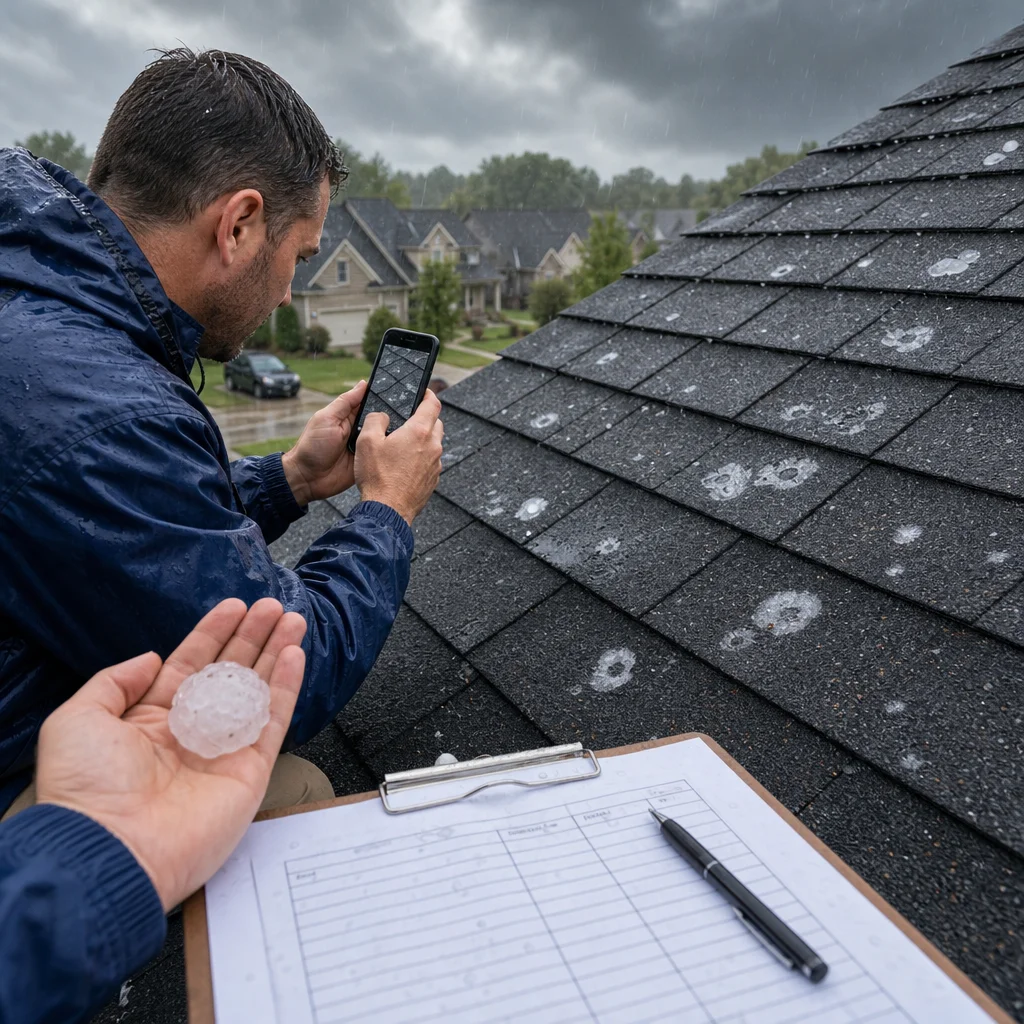
Maintenance records. If your roof is relatively new, save the original installation documentation. Proof that your roof was well-maintained counters any argument that damage resulted from poor upkeep rather than the hail event.
Having these elements ready before your first call to the insurance company streamlines the process and makes you a more credible claimant.
Photographic Evidence That Strengthens Your Claim
Photos are non-negotiable. They’re the most compelling form of hail damage documentation because they’re objective and difficult to dispute.
Capture images from multiple angles and distances. Take wide shots showing the overall affected area, then zoom in on specific damage. For a hail-damaged roof, photograph any visible dents, bruising, or exposed shingles. For siding, gutters, or vents, capture the same pattern of impact marks that indicates hail damage rather than general wear.
Include a reference object in some photos, such as a coin or ruler placed next to dents. This gives the adjuster a sense of scale and helps them assess severity more accurately.
Document from ground level if you can safely access the property perimeter, but never climb on your roof yourself. If you’re unable to photograph upper areas safely, mention this to your roofer. Professional photos taken from a drone or roof access are stronger than risky DIY attempts.
Photograph damage to other structures on your property too: detached garages, sheds, air conditioning units, or landscaping. If hail damaged multiple areas uniformly, it reinforces the claim narrative and may even reveal additional damage you initially missed.
Date-stamp your photos whenever possible, or note the date you took them. This creates a clear timeline and prevents disputes about when documentation occurred.
Gathering Professional Assessment Reports
This is where a professional roofer becomes invaluable. Insurance adjusters expect reports from qualified contractors who can articulate what they see in technical terms.
A professional assessment should include:
- A visual inspection of the entire roof and affected structures
- Specific identification of hail damage (size of dents, distribution patterns, impact marks)
- Cost estimates for necessary repairs or replacement
- Photos and measurements consistent with what the adjuster will see
- Professional credentials and licensing information
- Clear distinction between hail damage and pre-existing conditions
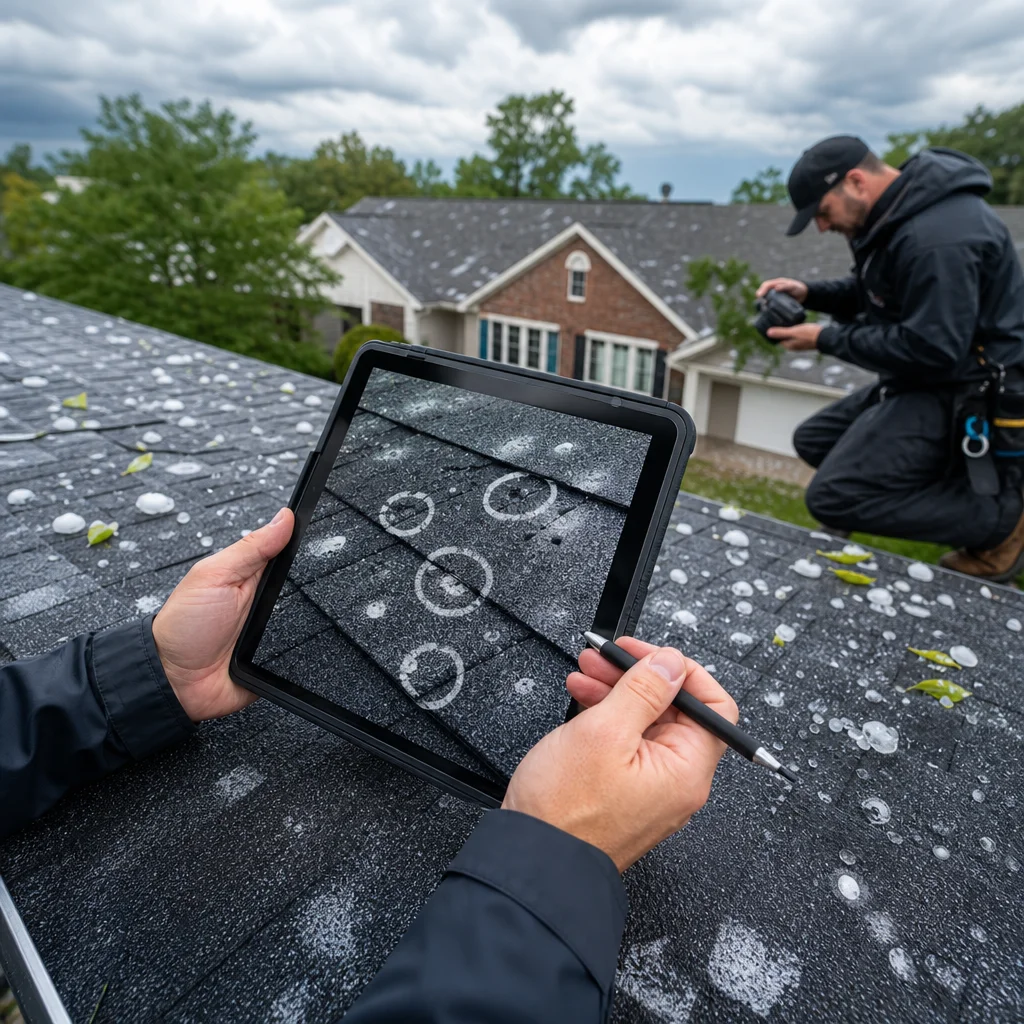
When we conduct damage assessments for clients, we photograph everything, measure impact patterns, document our findings in a detailed report, and make our analysis available to both you and your insurance company. This removes the guesswork and gives adjusters confidence in the damage claim.
Request this report in writing. Email confirmations and formal documents carry more weight than verbal discussions, and you’ll have a permanent record for your claim file.
How We Help Streamline Your Documentation Process
We understand that managing a damage claim while also arranging repairs is stressful. Our insurance claim assistance takes the coordination burden off your shoulders.
When you contact us after hail damage, we conduct a comprehensive roof inspection and provide a detailed assessment report at no upfront cost. We photograph the damage thoroughly, document measurements and patterns, and prepare professional documentation that meets insurance industry standards. We can also coordinate directly with your insurance adjuster, answer their technical questions, and address any concerns about the damage assessment.
Our Zero-Regret Roof System™ and Lifetime workmanship protection mean that once we complete repairs, you’re covered. We handle the documentation so you can focus on getting your property restored quickly.
Working with Adjusters: What You Need to Know
The adjuster assigned to your claim is not your advocate; they’re the insurance company’s representative. Their job is to verify that damage occurred, determine whether it’s covered, and authorize an appropriate payout. Understanding this dynamic helps you interact effectively.
When the adjuster visits, be present if possible. Walk them through the property, point out the damage, and provide your documentation package. Answer questions factually without speculation. If you disagree with their assessment, say so respectfully and ask for clarification or a second opinion.
Many adjusters respond well to professional documentation because it simplifies their job. When you present clear photos, measurements, and a professional assessment report, they spend less time investigating and more time processing your claim.
If the adjuster’s estimate seems low compared to the professional assessment, request an explanation. Ask whether they inspected all affected areas and whether they considered full replacement costs if the roof is near the end of its serviceable life. Sometimes adjusters underestimate damage simply because they didn’t look thoroughly.
Common Documentation Mistakes That Delay Payouts
Several missteps can slow or complicate your claim:
Missing the filing deadline. Don’t wait. File your claim promptly, even if documentation is incomplete. You can supplement the claim later, but missing the deadline can eliminate your coverage entirely.
Vague descriptions. Saying “roof damage” doesn’t help. Specify: “dents and bruising on north and east-facing slopes, multiple broken shingles, gutter damage along the east side.”
Photos without context. A close-up of a dent means nothing if the adjuster can’t see where it is on your property. Include wide shots showing the location.
Admitting pre-existing damage. If your roof had prior damage unrelated to the hail, don’t mention it unless the adjuster specifically asks. Let the professional assessment distinguish between hail damage and pre-existing conditions.
Repairing before documentation. Don’t clear debris or make temporary repairs until after the adjuster has seen the damage. Once it’s cleaned up, you’ve lost visual evidence.
Conflicting timelines. If you file the claim two weeks after the storm but claim you inspected the damage the day it occurred, the discrepancy raises questions. Document when you actually discovered damage versus when the storm occurred.
Navigating the Claim Timeline in Pennsylvania and New Jersey
Timeline expectations differ slightly between Pennsylvania and New Jersey, and between insurance carriers, but here’s a typical progression:
Days 1-3: Storm occurs and you discover damage. Contact a professional roofer and your insurance company.
Days 3-7: Submit your formal claim with initial documentation. Schedule the adjuster’s site visit.
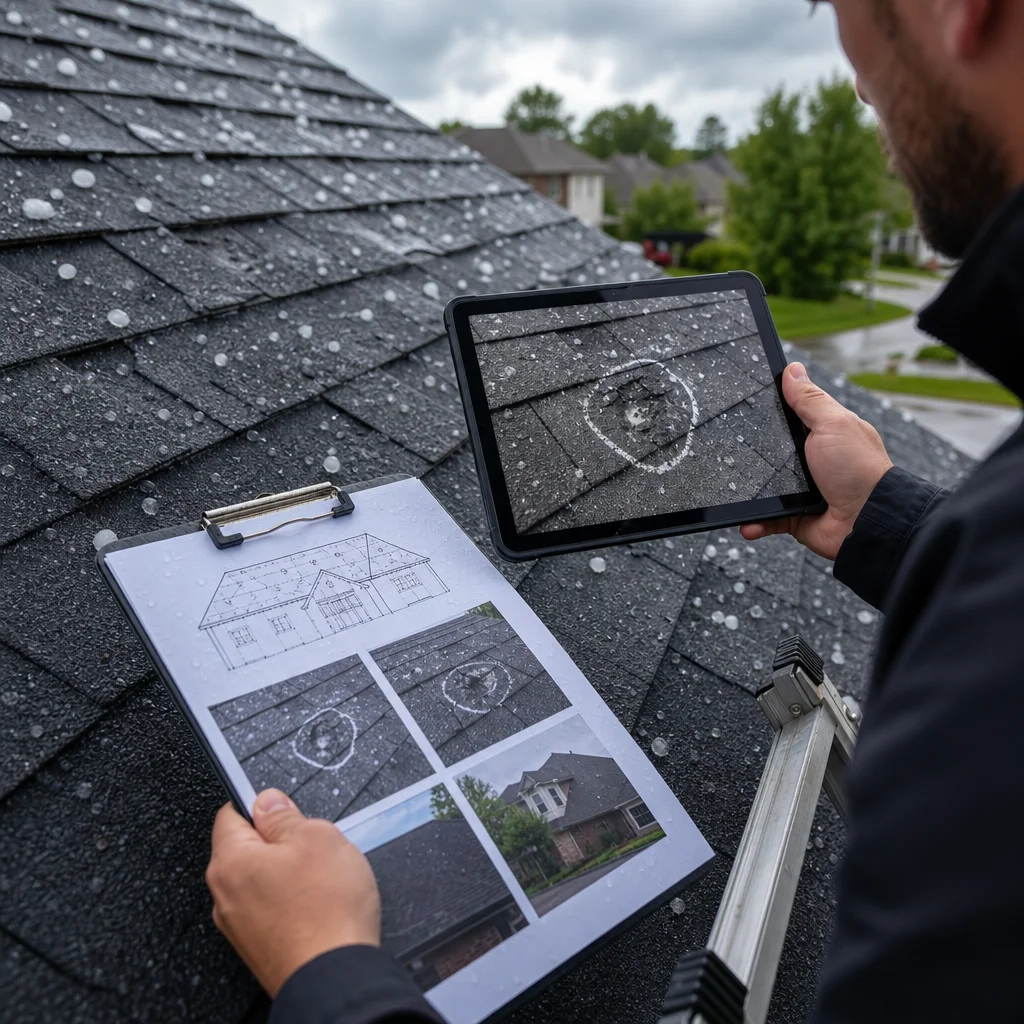
Days 7-14: Adjuster inspects the property. You provide supplemental documentation if requested.
Days 14-30: Insurance company reviews the adjuster’s report and your supporting materials. They issue a preliminary estimate or request additional information.
Days 30-60: Once approved, you receive an initial payment or authorization for repairs.
After repairs: You submit final invoices and photos showing completed work. Insurance releases the final payment, minus your deductible.
In Pennsylvania, insurers typically have 30 days to acknowledge your claim. In New Jersey, the timeline is similar but can vary based on complexity. Commercial properties sometimes face longer review periods.
Our experience with PA and NJ claims help means we understand these regional differences and can guide you through each phase.
Our Insurance Claim Assistance Advantage
We don’t just fix roofs. We handle the entire claim process with you, which includes preparing comprehensive documentation from day one.
When you choose North Star Roofing, you get a partner who knows what insurance companies need to see. We provide professional assessments, detailed photographic documentation, cost estimates that reflect true repair or replacement expenses, and direct communication with your adjuster. Our 12 iron-clad written guarantees include coverage for defects and damage, which gives you confidence that repairs will last.
If the insurance payout falls short of actual costs, we work with you on flexible financing options to cover the difference. We also handle emergency tarping and temporary protection immediately after the storm, preventing further damage while the claim processes.
The goal is simple: maximize your payout and get your property restored quickly. Strong documentation makes that possible, and we’re here to ensure every detail supports your claim.
Start today by scheduling a free assessment. Contact us within 48 hours of discovering hail damage so we can capture the evidence while it’s most compelling. Your insurance company expects professional documentation, and we deliver exactly that.
Frequently Asked Questions (FAQ)
What documentation do we recommend photographing after hail damage occurs?
We advise capturing clear images of all affected areas from multiple angles, including close-ups showing the actual hail impact marks on shingles, gutters, downspouts, and any visible dents or cracks. Include wide shots showing the overall damage pattern across your roof sections. We also recommend photographing the surrounding landscape for context, such as damaged siding, broken windows, or debris scattered across your property, as this strengthens your claim narrative.
How quickly should we contact our insurance company after hail damage?
We encourage you to report the damage within 24-48 hours of the storm event, as this demonstrates promptness and creates an immediate claim record. However, take time to document damage thoroughly before calling, since having photos and notes ready when you contact your insurer accelerates the assessment process. The faster you report, the sooner we can schedule our professional evaluation to support your claim.
Why should we involve your team in the claim process?
We streamline your documentation by conducting a thorough professional assessment that identifies damage your eye might miss and provides detailed reports adjusters recognize and respect. Our experience working with insurance companies throughout Pennsylvania and New Jersey means we know exactly what documentation insurers require, which reduces delays and helps maximize your payout. We handle the technical language and communication with adjusters, allowing you to focus on your property rather than navigating the claims process alone.